Join us on March 31 at 11a.m. in the Claudia Crosby Theater for the 2026 Helen Keller
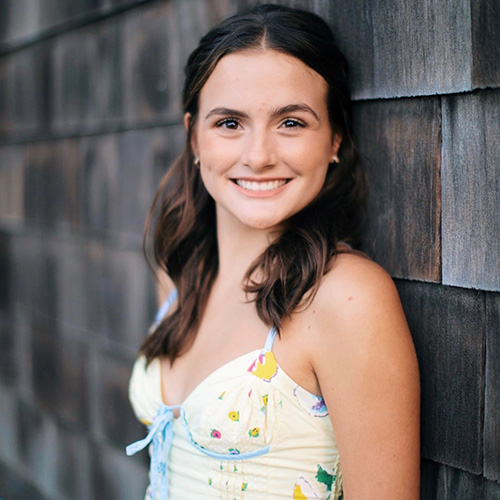
Lecture Series. Shark attack survivor and LuLu Strong Foundation founder Lulu Gribbin
will share her powerful story of resilience and purpose. Admission is Free.
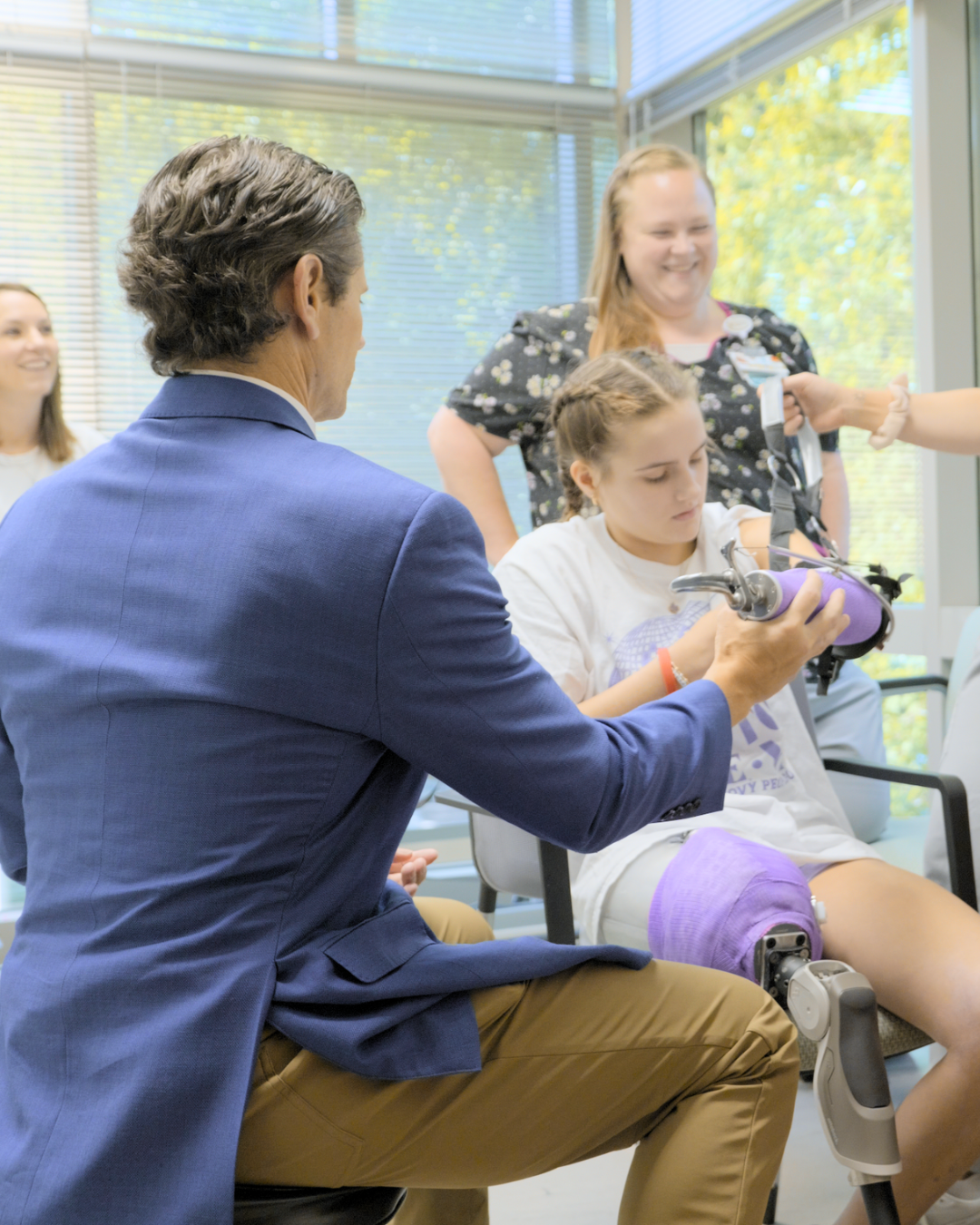
Lulu's survivor story began on June 7, 2024. While diving for sand dollars with friends
on Florida's Gulf Coast, she was attacked by a bull shark, which severed her left
hand and part of her right leg. Thanks to the immediate help of nearby strangers,
Lulu was airlifted to a Pensacola hospital where her surgeon's battlefield experience
led him to make the difficult but life-saving decision to amputate her leg.
For most people who have lost at least one limb, acclimating to a life reliant on
prosthetics is an arduous process full of pain and roadblocks; the path to recovery
is often limited not by will, but by outdated tools and limited resources. But Lulu's
experience was different. She gained access to cutting-edge virtual reality (VR) therapy
and other rehabilitation treatments that allowed her to walk out of the hospital after
only 77 days — an achievement that typically takes people with similar injuries a
year or more.
Lulu has worked to pass the Lulu Gribbin Shark Alert System Act in Alabama and is working on the federal level to pass S.1003, the bipartisan bill known as Lulu's Law.
Lulu also founded the Lulu Strong Foundation, a 501(c)(3) nonprofit accelerating progress and affordability of AI-powered prosthetics, VR therapy, and other emerging technologies that restore confidence and independence to amputees.
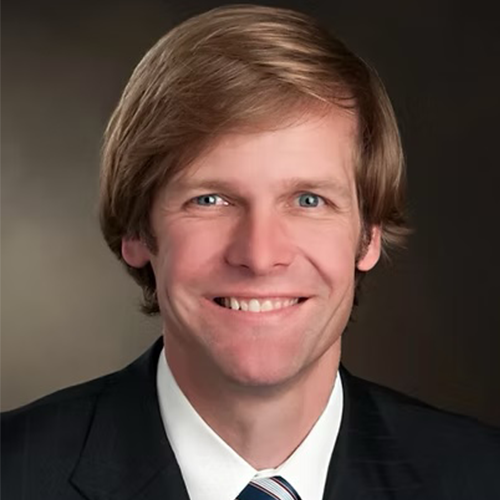
Dr. Glenn Gaston is Hand and Upper Extremity Fellowship Director at OrthoCarolina
and Co-Director of the OrthoCarolina Reconstructive Center for Lost Limbs. He is internationally
recognized for his expertise in complex limb reconstruction, nerve surgery and innovative
approaches to amputee care.
Dr. Gaston has trained surgeons from around the world and played a central role in
developing Targeted Brain Rehabilitation (TBR) therapy, which is changing the way
phantom limb pain is treated.
Dr. Gaston's CV
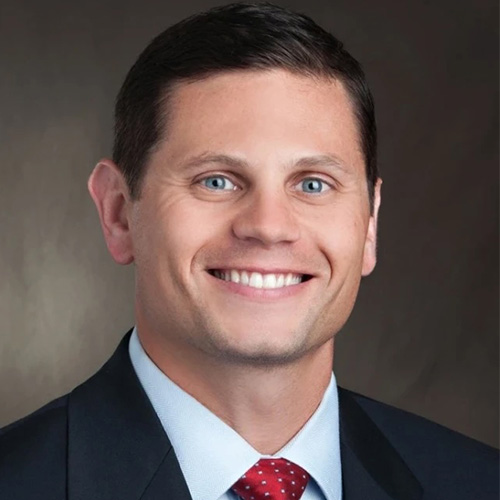
Dr. Bryan Loeffler is an orthopedic hand, shoulder and elbow surgeon at OrthoCarolina
and Co-Director of the OrthoCarolina Reconstructive Center for Lost Limbs. He specializes
in advanced microsurgical techniques, nerve reconstruction and complex amputee cases.
Dr. Loeffler's research and clinical work have contributed to global advancements in
limb-loss treatment, including the development and refinement of the TBR program.
Dr. Loeffler's CV
September 18, 2025 marked a milestone achievement for shark attack survivor Lulu Gribbin as she announced the launch of the Lulu Strong Foundation, a 501(c)(3) nonprofit. Lulu Strong aims to help provide funding for and access to cutting-edge prosthetic technologies and therapies that restore independence and confidence for amputees at speeds that previously never seemed possible.
“There's a barrier to access between what's been invented and what amputees and their physicians can readily utilize,” said Lulu Gribbin. “Right now, pioneering life-changing technologies are out there, but not accessible to most people. We want to build towards a world where everyone who needs these tools can get them. That's our goal.”
The foundation applies what Lulu and her family have learned through her recovery process and focuses on closing the tech gap for amputees by raising funds and awareness to accelerate access to and affordability of the tools that facilitated her incredible recovery: AI-powered prosthetics, VR therapy and other emerging technologies. The foundation's ultimate goal is to bring down the cost of these treatments, expand their applications to other limbs, and make them available to every amputee at every hospital in America.
OrthoCarolina is one of the nation's leading orthopedic practices, providing comprehensive musculoskeletal
care to more than one million patients annually. With over 160 physicians and 39 locations,
the practice is physician-owned and physician-led, allowing clinical experts to make
decisions that keep patient outcomes at the forefront. OrthoCarolina is committed
to innovation, accessibility, and delivering care that is both cutting-edge and community-centered.
The OrthoCarolina Reconstruction Center for Lost Limbs is the first of its kind in the U.S., offering integrated surgical, rehabilitation,
prosthetic and psychological support under one roof. The program has pioneered techniques
like TBR and the combined Targeted Muscle Reinnervation (TMR)+TBR approach used in
Lulu's case. Surgeons from across the globe travel to Charlotte to learn these methods,
bringing OrthoCarolina's innovations to patients worldwide.
The OrthoCarolina Research Institute is a nonprofit organization dedicated to advancing orthopedic science through clinical research, education and innovation. OCRI supports more than 260 active research studies each year, with 75–80 peer-reviewed publications annually. Its work spans all orthopedic subspecialties, with a focus on improving patient outcomes and developing new techniques and technologies, including the groundbreaking TBR therapy used in Lulu's care.
No one heals alone. For information on how Lulu Strong will achieve these goals and to find out how you can help.
The Helen Keller Lecture Series, which began in 1995 as the vision of Dr. and Mrs. Jack Hawkins, Jr., was initiated to call attention to and raise awareness of the challenges of those with physical limitations, particularly those affecting sensory ability. Through the years, the lecture has also provided the opportunity to highlight those who have devoted their careers to meeting the needs of the sensory impaired and to celebrate the collaborative efforts and partnerships of Troy University and the agencies and individuals who serve these special individuals.
Helen Keller, an Alabamian and American author and lecturer, overcame considerable obstacles to become an inspiration for others with disabilities. Born in Tuscumbia, Alabama, she contracted an illness at 19 months old that left her deaf and blind. For years, there was no way to educate her until, at age seven, she began her special education in reading and writing with Anne Sullivan.
Miss Keller quickly learned to read using the Braille system and to write using a specially constructed typewriter. In 1890, after only one month of study, she learned to speak. Ten years later, she was able to enter Radcliffe College, where she graduated with honors in 1904.
Miss Keller then served on the Massachusetts Commission for the Blind and, shortly thereafter, began lecturing throughout the world. After World War II, she visited wounded veterans in United States hospitals and lectured in Europe on behalf of those with physical impairments.
Her writings include “The Story of My Life,” “The World I Live In,” “Out of the Dark,” “Midstream,” “My Later Life,” “Let Us Have Faith,” "Teacher: Anne Sullivan Macy” and “The Open Door.” Her life is the subject of the film, “The Unconquered,” and the play, “The Miracle Worker,” which was made into an award-winning film by American author William Gibson.
For 28 years the following agencies have co-sponsored the event: Alabama Institute for the Deaf and Blind, Alabama Department of Mental Health, Alabama Department of Rehabilitation, Alabama State Department of Education, Helen Keller Foundation and Troy University.